Character Story
Ammagaruqnik (or Amagar for short) was born twenty-five years ago. He came to the world on the frozen
lands of Heynukilik, where his tribe had long struggled against eternal winter. The community, numbering
fewer than two hundred people, subsisted primarily through hunting and herding. During warmer periods,
when the sea was free of ice, they hunted seals, whales, and other marine creatures. However, when ice
covered the waters, the entire tribe would migrate westward to herd mountain goats and yaks, as well as
to hunt the wild animals native to that region.
Amagar spent his childhood mastering the art of the
hunt; in his spare time, he assisted the tribal shaman in gathering local herbs and mosses and in
preparing special medicinal or protective concoctions. Upon turning sixteen, Amagar was required to
embark on a solitary hunt—a test of his worth and utility to the tribe. During the expedition, he
encountered an arctic lion, which he deemed the perfect quarry. Yet, the wild beast proved far stronger
than the inexperienced half-orc, and the tide of battle began to turn in the creature's favor. That was
when Amagar lost consciousness. When he woke up, he was lying wounded in the snow; beside him lay the
lion’s lifeless carcass, the hunter’s massive axe embedded in its skull. Unsure of exactly what had
transpired, the half-orc surmised that he must have struck the beast in the head with his last ounce of
strength—acting instinctively, as he had no memory of the fight's conclusion due to his injuries and
exhaustion. After resting, he brought his kill back to his kin; he was welcomed as an adult member of
the clan, and his body was adorned with tribal tattoos.
For the next five years, Amagar lived as a
typical member of his clan, participating in hunts and defending the group against wild beasts. In his
spare time, he enjoyed talking to the few half-orcs who undertook trading expeditions to the north. It
was from them that he learned the language and customs of the lands beyond the realm of eternal winter.
When he was twenty-one, an incident during a hunt changed the half-orc’s life forever. The hunting party
was small, consisting of only three individuals. While they were crossing a frozen, snow-covered river,
the ice gave way beneath one of the hunters. They managed to pull the unfortunate man out, but, soaked
and frozen, he was on the verge of death. The others decided to abandon the hunt immediately and return
to the village as fast as possible. Unfortunately, on the way back, a pack of wild wolves sensed easy
prey and attacked the travelers. Realizing they had no chance of escape and knowing the dire condition
of their companion—who was suffering from severe exposure—Amagar ordered his fellow traveler to flee to
the village with the injured friend, while he himself held off the attackers for a time. The last thing
he remembered of the event was his friend slowly moving away, dragging a stretcher, and a pack of wolves
lunging straight at the lone warrior. When he regained consciousness, a group of his kin—who had set out
to rescue him—stood over him, while dead wolves lay scattered all around.
Amagar was taken to the
village and brought before the shaman. The shaman listened to the accounts given by both Amagar and his
companion. It turned out that the moment the wolves had attacked the half-orc, his tattoos had begun to
glow faintly, and he had flown into a berserker rage, slaughtering the wild beasts. According to the
shaman, this was a type of curse that occasionally afflicted their tribe. All the signs matched: loss of
consciousness during the frenzy, faintly glowing tattoos—illuminated by an evil power seeking to break
free from the unfortunate soul—and supernatural strength bestowed by demons. The shaman and the tribal
chief decided that Amagar would face the same fate as other clan members previously tainted by the
curse: exile from the tribe, with the possibility of return should he manage to rid himself of the
affliction. Yet, no hunter banished in this manner had ever returned to the tribe. After all, a
community living in such harsh conditions could not keep in its ranks someone over whom dark forces held
sway. Amagar had a final conversation with the shaman, who offered guidance on where to seek information
about the curse and where to find help. He was also given a set of amulets to protect him from evil
forces. Having finished his preparations, he set out northward in search of great stone huts said to
house vast quantities of parchment scrolls containing information on any subject imaginable—or so the
shaman had described them. It was rumored that there, Amagar might find salvation for his soul. After
leaving Heynukilik, the exile encountered numerous perilous situations but always emerged unscathed.
How? He did not know, for he would invariably lose consciousness, only to regain it after the danger had
passed.
A turning point came when, following another blackout, Amagar awoke surrounded by the corpses of
small, green creatures. He did not know exactly what these beings were (in game terms, we might identify
them as a band of goblins, but how would a savage like Amagar know what a goblin is?), yet he knew they
coated their weapons in a potent venom. With his last reserves of strength, the warrior built a
makeshift shelter, lit a fire, and gathered herbs to combat the poison ravaging his body. Realizing his
condition was dire, he burned the special herbs used by the tribal shaman, arranged protective spirit
figurines, and slipped into a trance. In this state, he made contact with Nanuq, one of the most
powerful spirits, who manifested as a massive white-furred bear. The mystical being recounted the events
of the recent battle—the one during which he had lost consciousness—as well as the battles before that,
and the ones even earlier. The astonished hunter learned that the spirits were constantly by his side,
allowing them to reveal exactly what had transpired each time his memory failed him. Finally, he was
told that Amagar had a vital role to play in his clan's survival and was urged not to worry, for the
tribal spirits were constantly watching over him. Once he had recovered, the warrior resumed his journey
in search of answers regarding his curse. Along the way, he encountered various sages, hermits, and
priests who tried to help him understand his affliction, yet none could help him break the curse.
Character Overview
Over the course of his life, Amagar has learned many useful skills that help him survive in harsh
conditions. He knows how to hunt and is knowledgeable about animals, the weather, and the natural world
in general. Furthermore, assisting the clan shaman has given him some insight into herbs, healing, and
tribal rituals. Being raised in the unique society of the Innuqutakki clan has instilled specific traits
in him. Above all, Amagar avoids senseless aggression; he fights only when hunting or in self-defense.
Additionally, he does not grasp the concept of dishonesty. Raised in a society where the word "lie" does
not exist, he takes everything he hears at face value. He might question the logic of a statement, but
he will not doubt its veracity. For instance, if two thugs accosted him claiming the local king had
ordered everyone to surrender all their gold—and that they were the king's collectors—Amagar might argue
that the law was stupid, noting that he had barely any gold and needed it to buy food. Yet, from then
on, he would avoid anyone associated with that king (fearing he would have to hand over his gold) and
warn travelers to steer clear of the region because of its idiotic law stripping ordinary people of
their wealth. While this trait may fade over time, initially he will swallow everything he hears hook,
line, and sinker. Especially since he has limited intelligence—after all, how could he possibly learn
anything more while living in a rather primitive tribe?
Having been raised in a deeply "religious" society and trained by a shaman, Amagar places great
importance on meditation, trances, and communing with spirits. To this end, he always carries a few
figurines representing mystical beings, as well as herbs that he burns like incense to induce a
meditative state.
Finally, there is the matter of the "curse," the spirits, and the rage. Essentially, the situation is
half of what the shaman claimed: during a rage, higher powers take control of Amagar’s body. However, it
isn't entirely a bad thing, as these are simply higher tribal spirits—akin to lesser gods. They only
intervene when Amagar faces serious danger. That is why he has no memory of the events afterward, yet
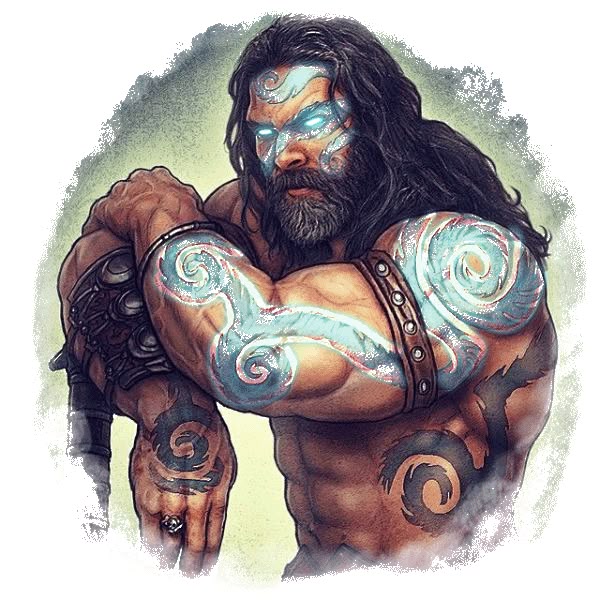
can later learn exactly what happened through meditation with those same spirits. The glowing tattoos
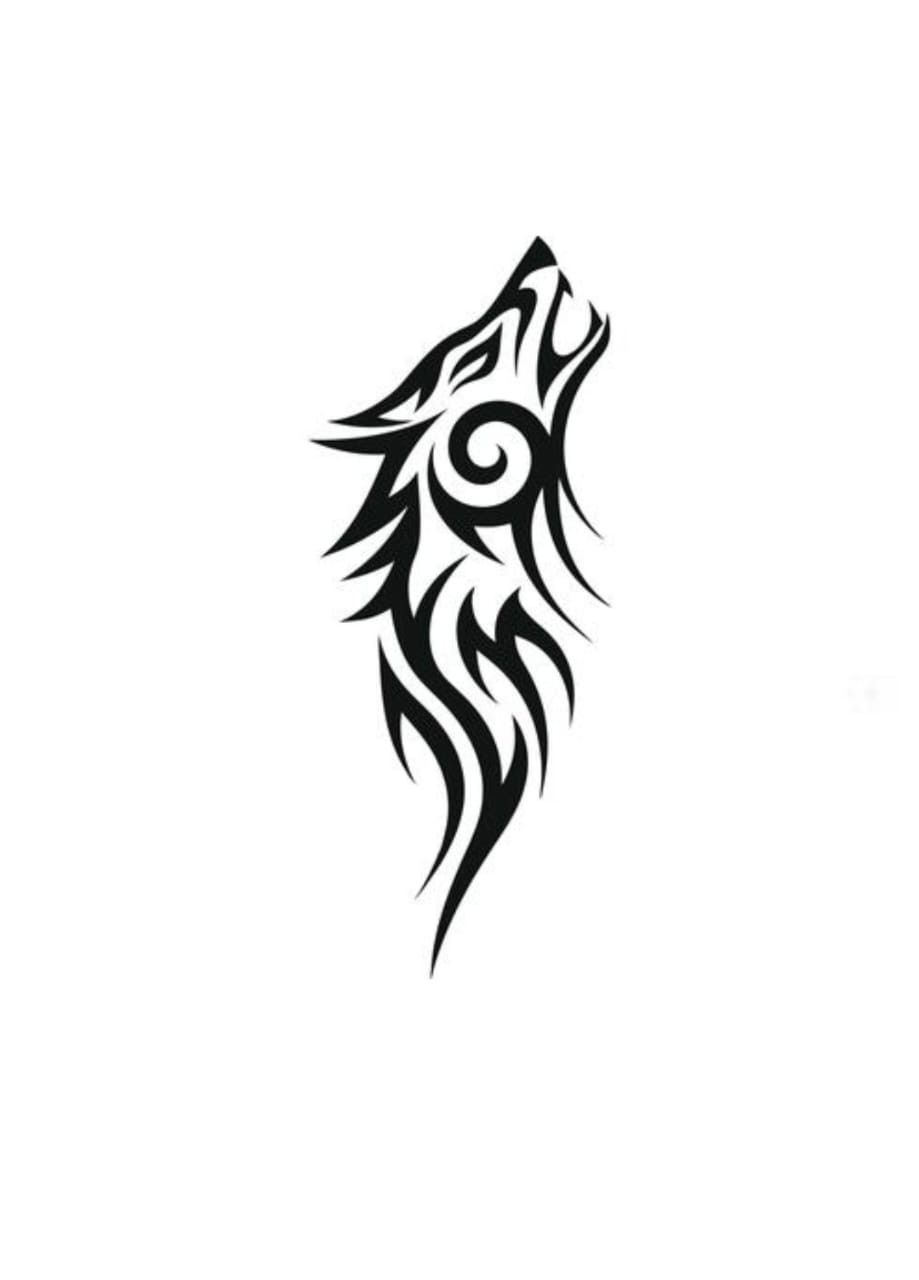
are simply a sign of a spiritual patron's presence. Eventually, I planed to take the "Path of the Totem
Warrior" subclass, where specific animals are chosen as totems. I wanted to set it up so that—if I
choose the wolf, for instance—entering a rage causes the wolf tattoo to glow in a distinct color, in
addition to the usual illumination effect. It will be hard for bystanders to notice, as the tattoos
aren't particularly conspicuous, but if I would decide to go without armor, it might become visible.
Additionally, at higher levels, I should be able to control my rage better, potentially allowing me to
remain conscious and avoid those memory gaps. For the start tho, we established that I could speak with
the
spirits every four or five days and only then find out exactly what had happened during rage
(Ammagar could freely meditate every day, but whether the spirits would respond or not was up to the
DM).
Now, regarding the story's potential paths: First, will I manage to figure out that the "rage" is simply
spirits taking control? If so, what is their goal? Is it a curse and a punishment? Or have I been chosen
for some higher purpose? Since I’m not the first person in the tribe to suffer from this affliction,
what happened to my predecessors? If they never returned, where did they fail? Will I find the answers
to these questions in the libraries recommended by the shaman? Or will I have to look elsewhere—or
perhaps prove to the spirits that I am worthy of their attention—before I learn the truth? That’s why I
chose the "Hermit" background: I’ve been traveling and seeking information ever since my exile.
Background's special feature is "Discovery," which could be utilized at the right moment—specifically to
solve the mystery (after gathering the necessary clues).
Appearance
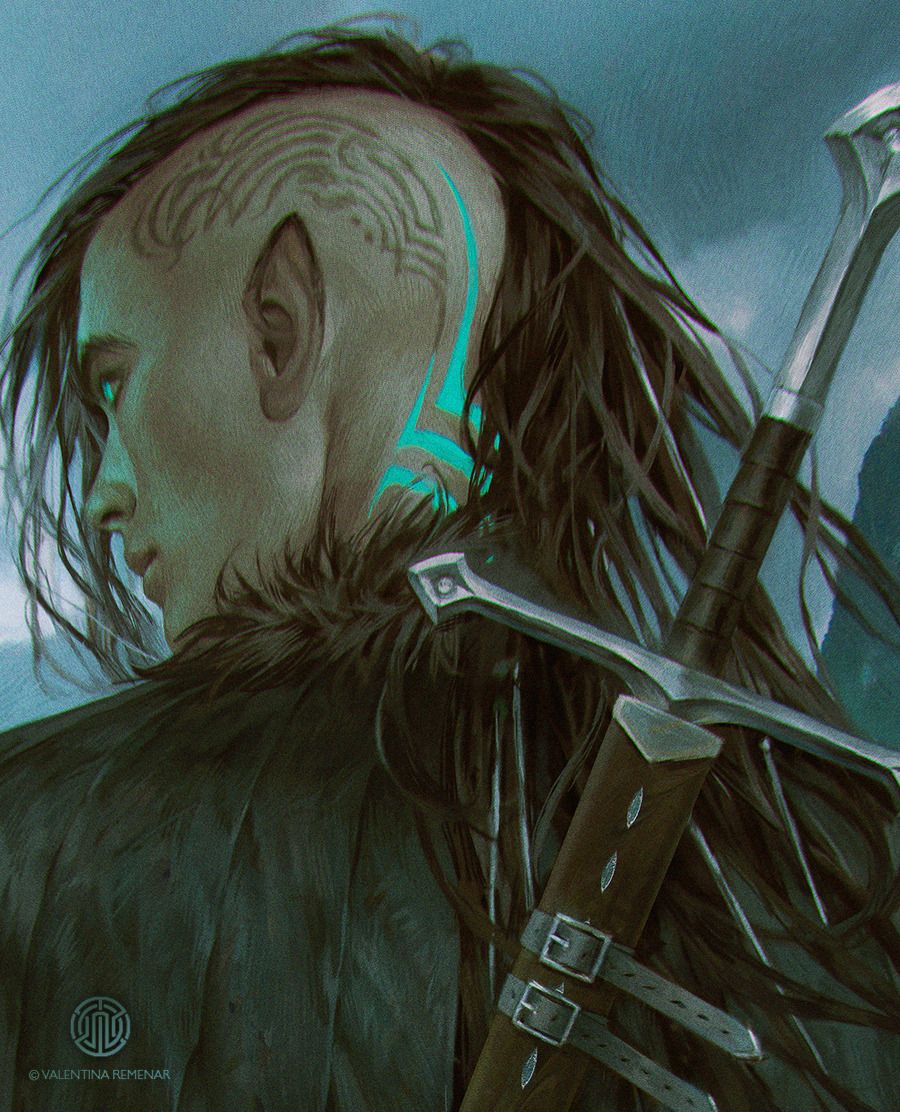
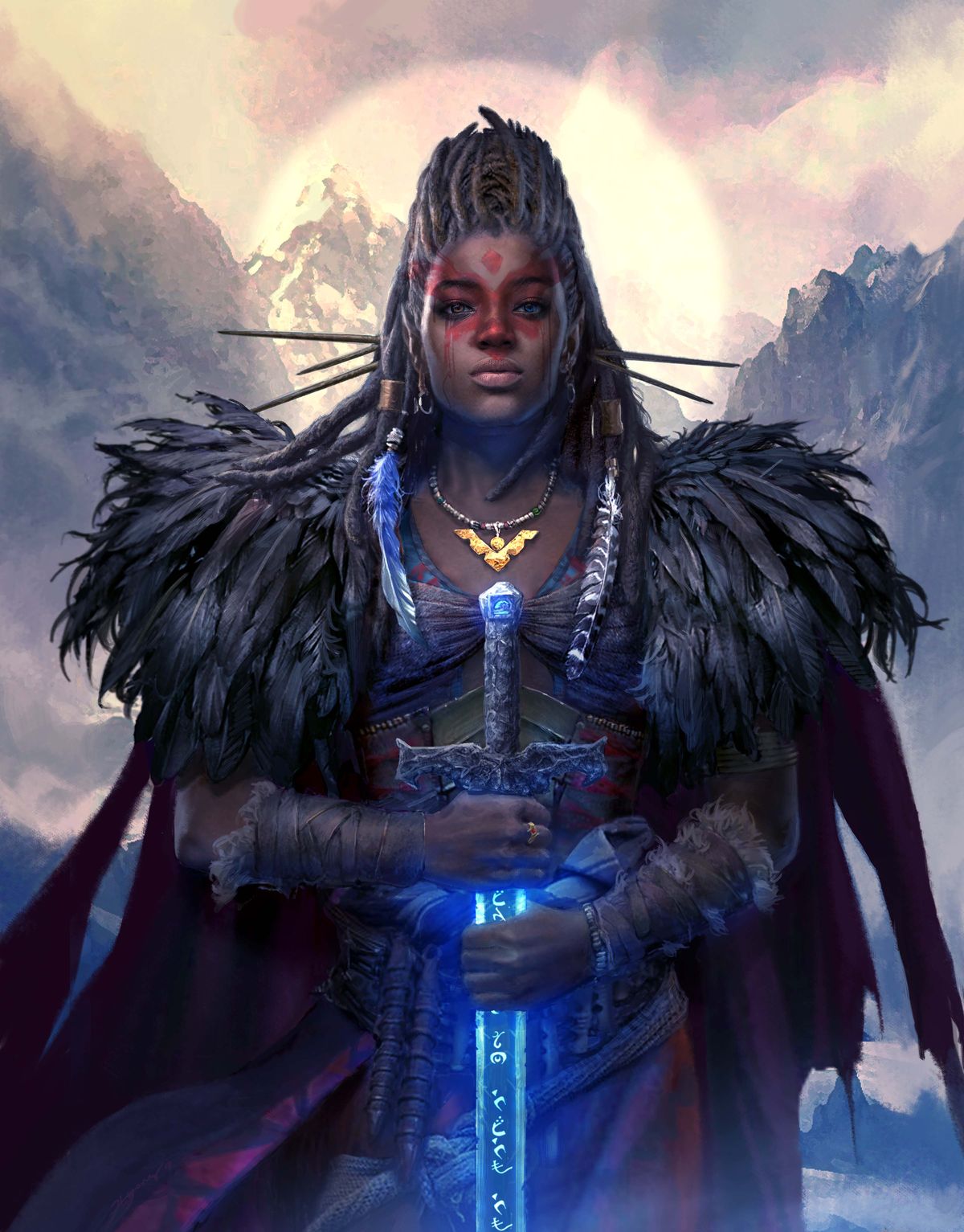
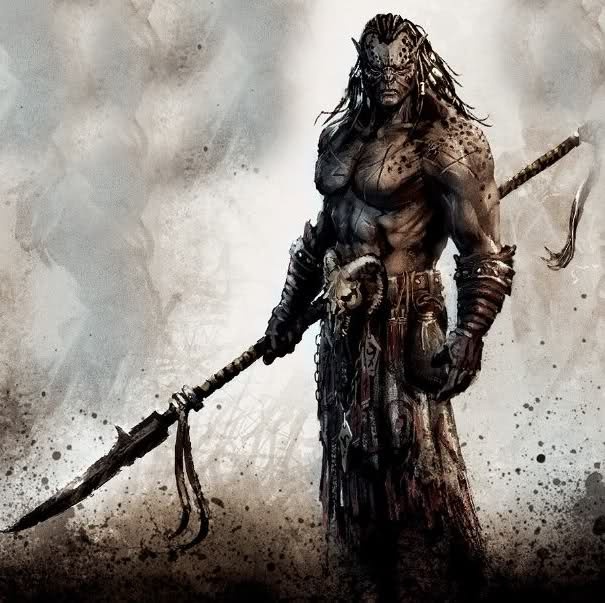
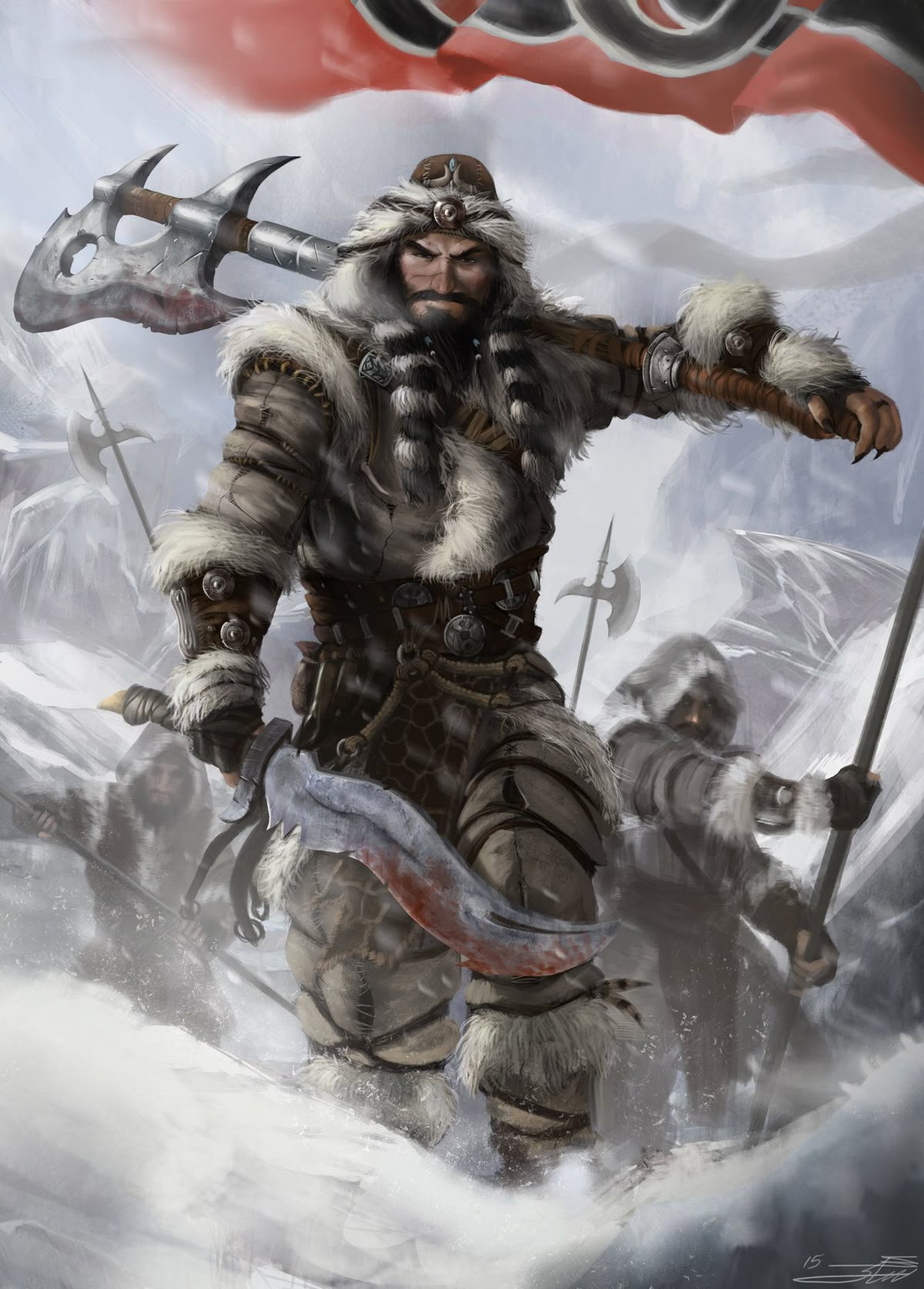
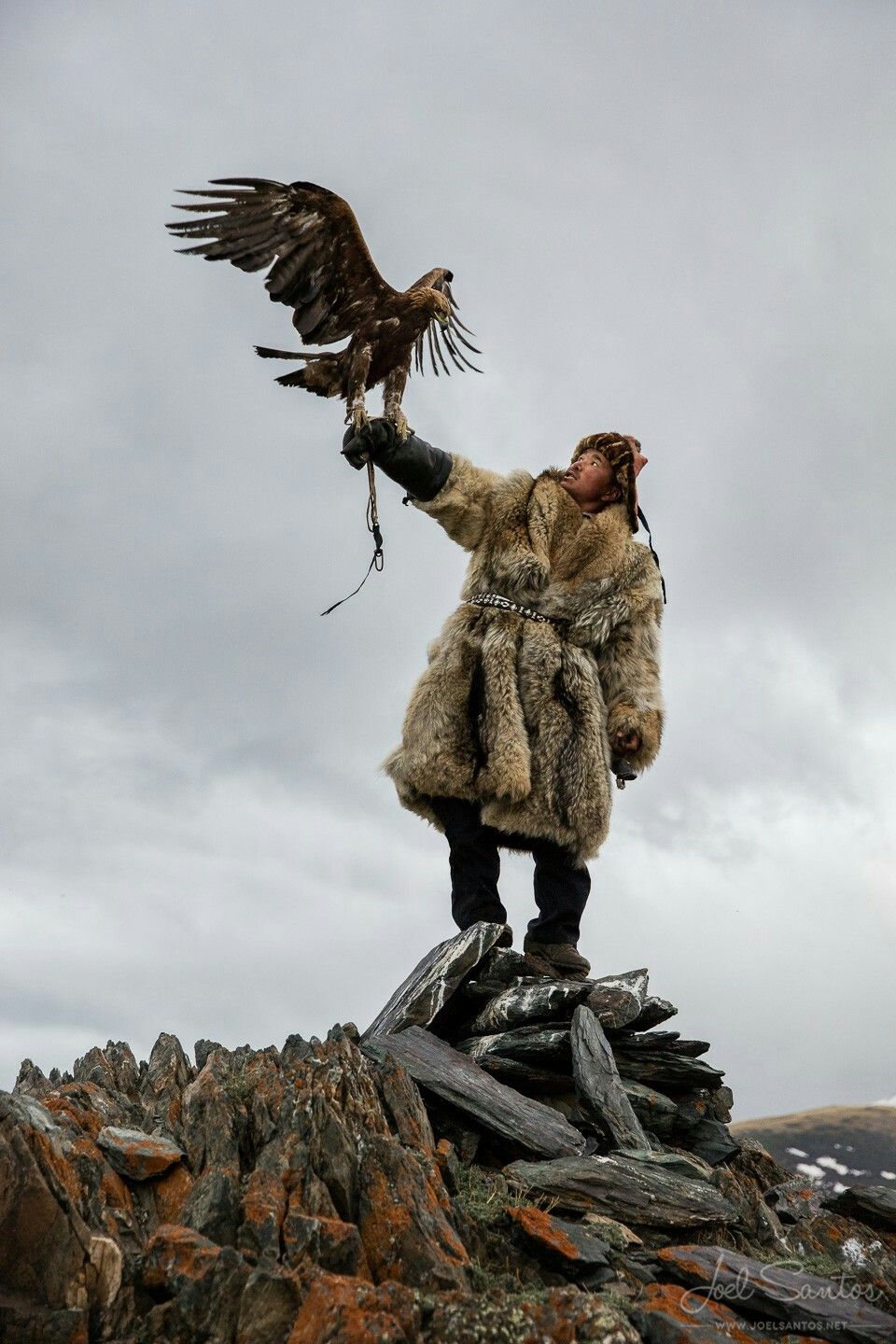
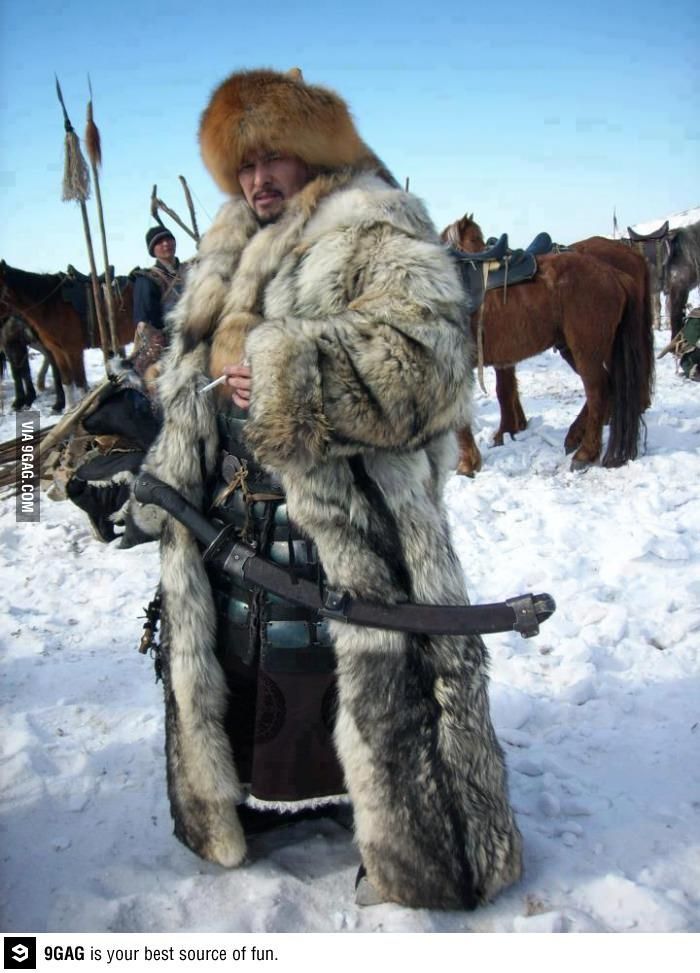
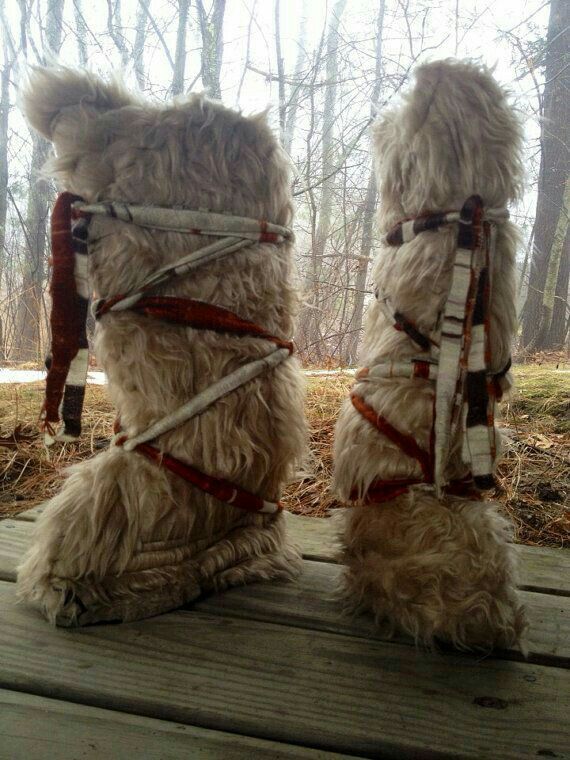
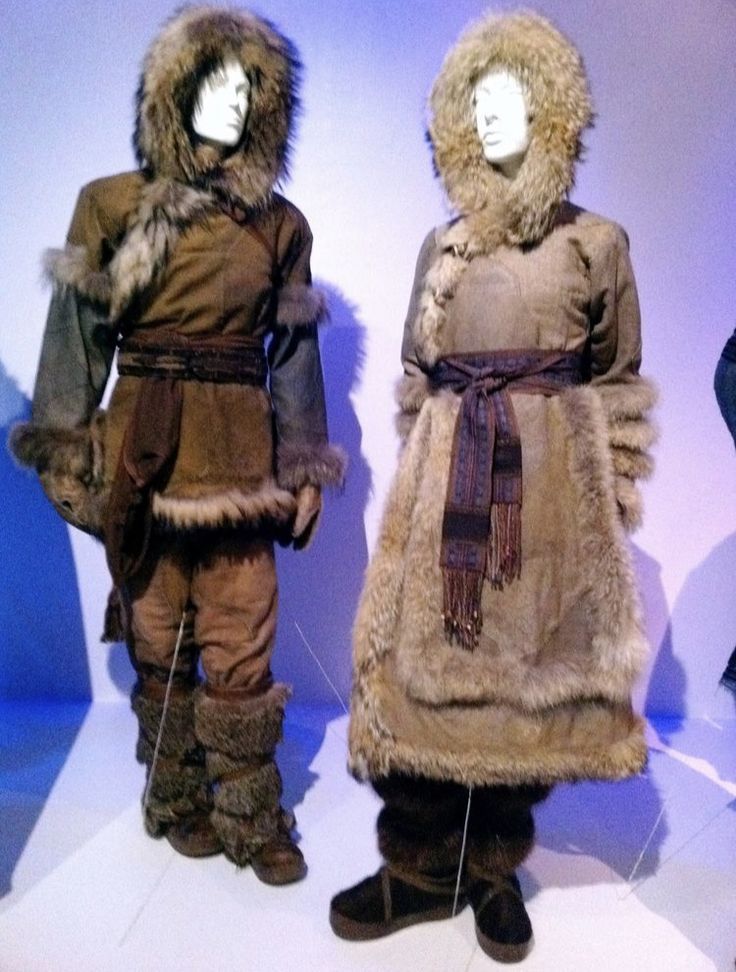
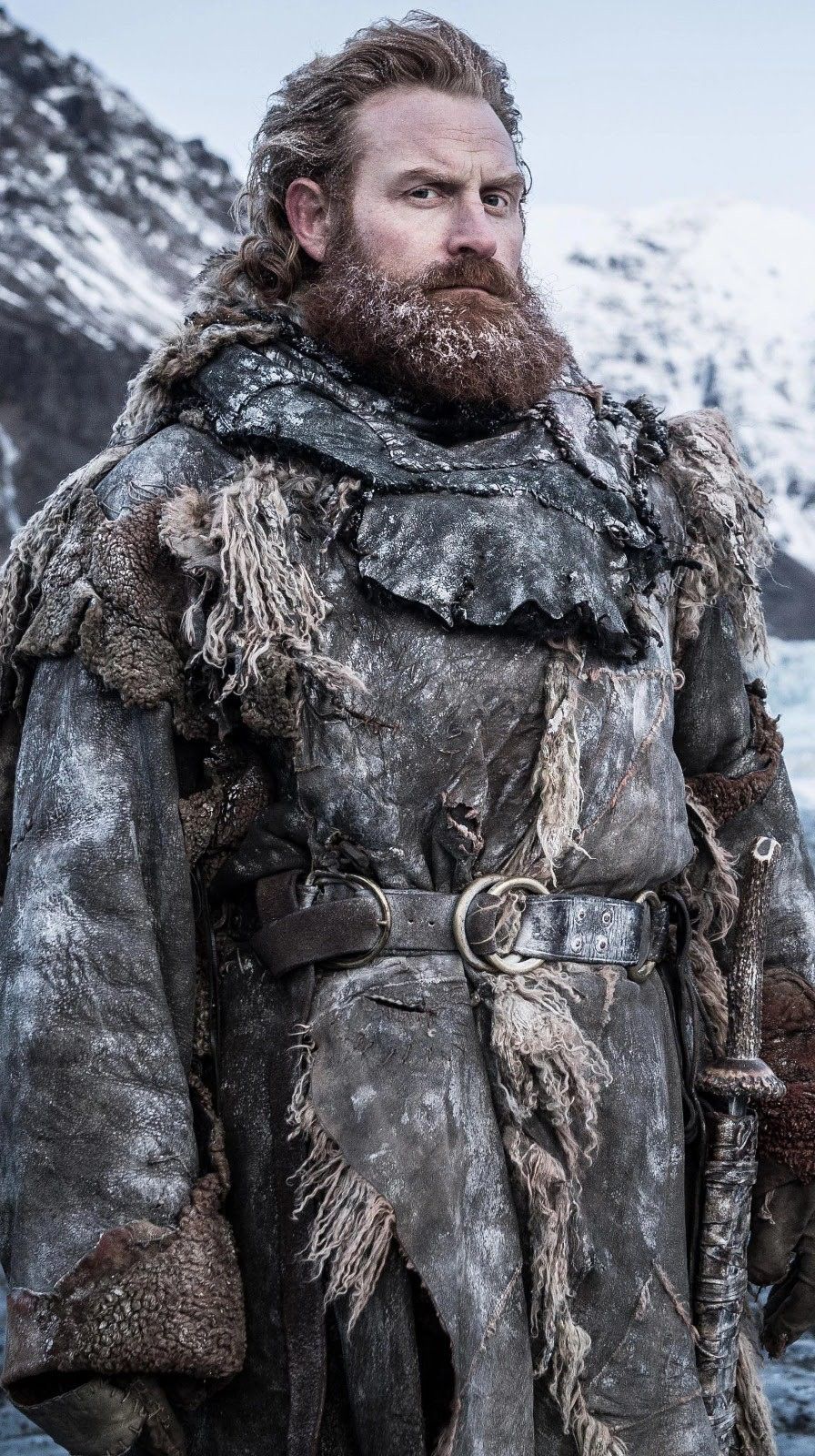
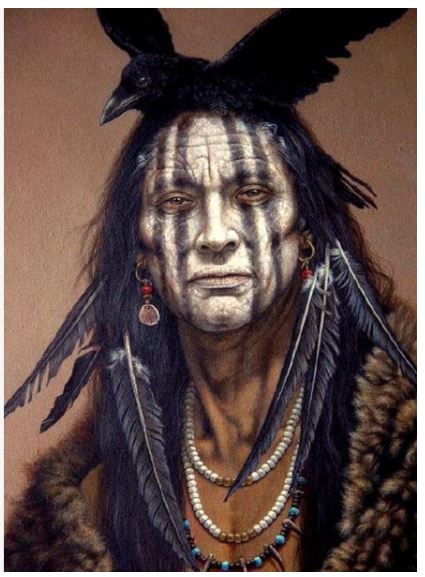
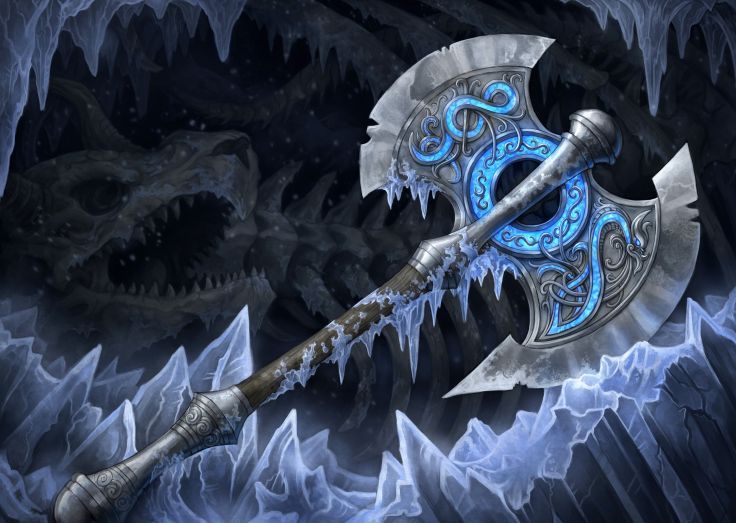
Amagar is a rather tall and well-built half-orc. His skin is a gray-brown-navy blue color. His eyes are also navy blue. Most of his black-gray hair is matted into dreadlocks, which are usually tied back in a ponytail. The remaining strands are braided into thin braids. He has a gray tribal tattoo on his face. It's one of many that cover the half-orc's body. All of them are designed in the same simple, tribal style. Amagar wears warm clothing made from animal skins, providing excellent protection against the cold. He also wears a winter wolf pelt on his back, often serving as a blanket when resting. He carries two small axes, a dagger, and a pouch at his belt. He also carries several javelins, tied together and slung over his shoulder on a rope. His primary weapon, however, is a large, two-handed axe, to which he has attached several animal amulets (feathers, fangs, claws). The rest of his equipment is stored in a small barrel, securely tied with a net (like a fishing net) and slung over his back. This allows Amagar to place his belongings on the snow without worrying about them getting wet.
Tribe Overview
The Innuqutakki are a very ancient tribe of half-orcs. Their exact origins remain unknown. Originally,
they were a nomadic tribe inhabiting rather unremarkable lands, sustaining themselves through hunting
and raids on neighboring villages. The latter practice proved to be their undoing; desperate rulers of
the surrounding territories raised an army and invaded Innuqutakki lands. To save themselves, the entire
tribe fled far to the south, into regions of eternal winter. The new conditions were harsh, yet at least
they were no longer pursued by an army of knights. The half-orcs quickly adapted to their new
environment, spending the ensuing centuries hunting wild game.
Their year is divided into two seasons. During the warmer period, they travel east to the Sea of Ice,
where they hunt seals, whales, and other creatures found in those waters. When the bitter cold sets in
and the sea freezes over, the entire tribe migrates west to herd mountain goats and yaks. While the
community is largely self-sufficient, for the past three hundred years, a caravan has been sent north
once a year. Only select clan members participate—those familiar with the lands beyond Heynukilik and
well-versed in the language and customs prevailing there. Upon reaching the nearest towns, they trade
various animal products—such as hides, bones, meat, and organs—as well as plants that grow only in the
far south, in exchange for items unavailable in the land of eternal winter, such as tools, weapons, and
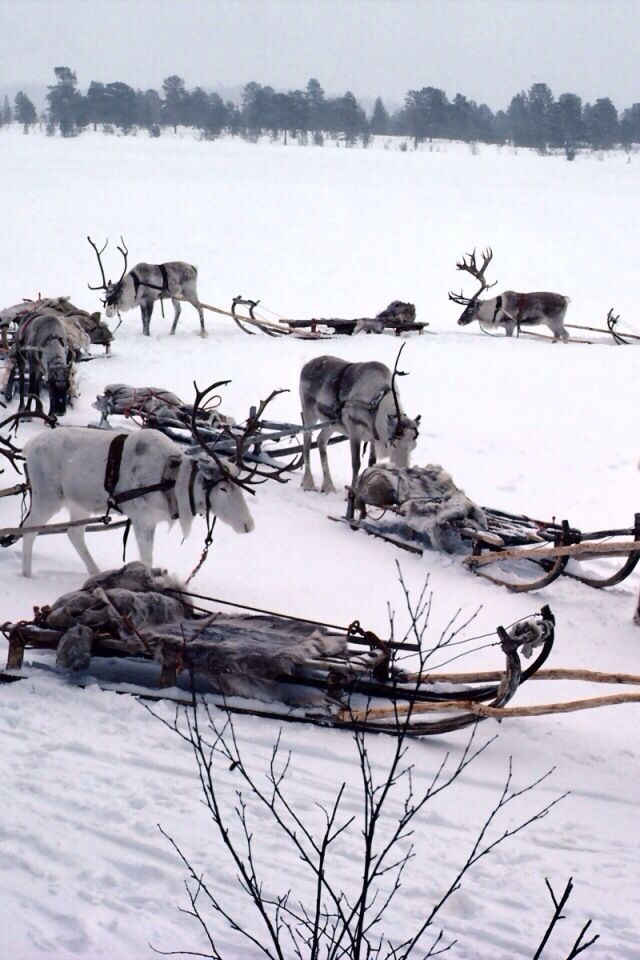
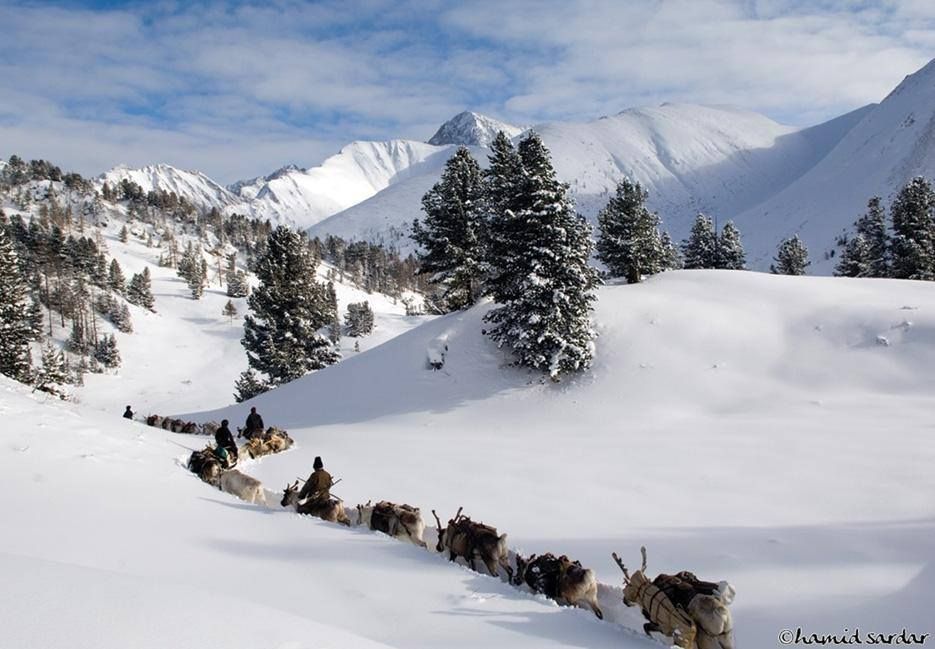
herbs from warmer climates. To transport themselves and their belongings, the tribe uses yaks—capable of
hauling heavy loads—and domesticated winter saber-toothed tigers, which pull sleds carrying lighter
cargo and are frequently used during hunting expeditions.
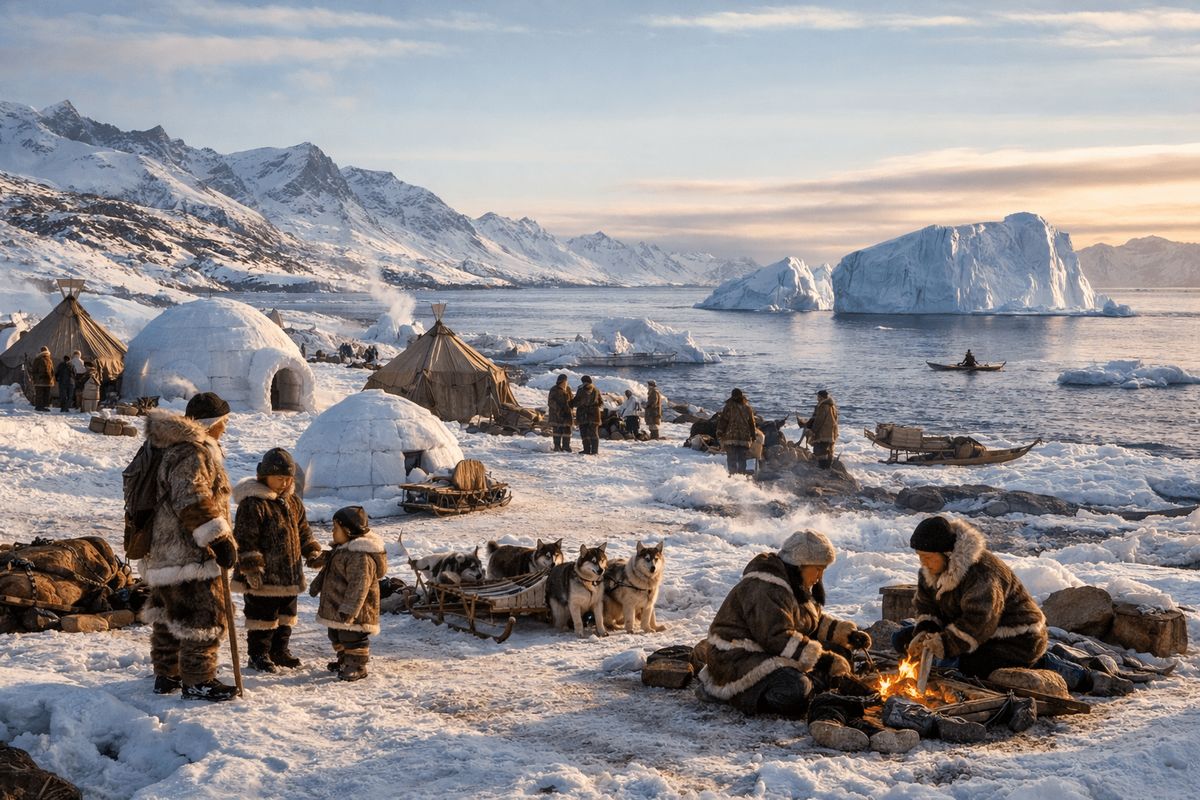
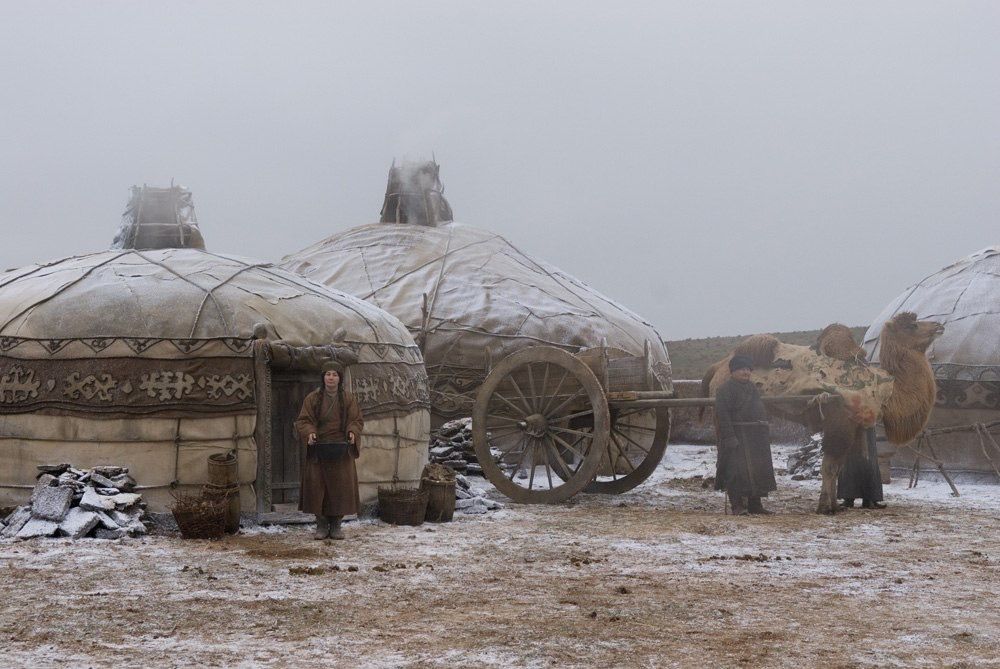
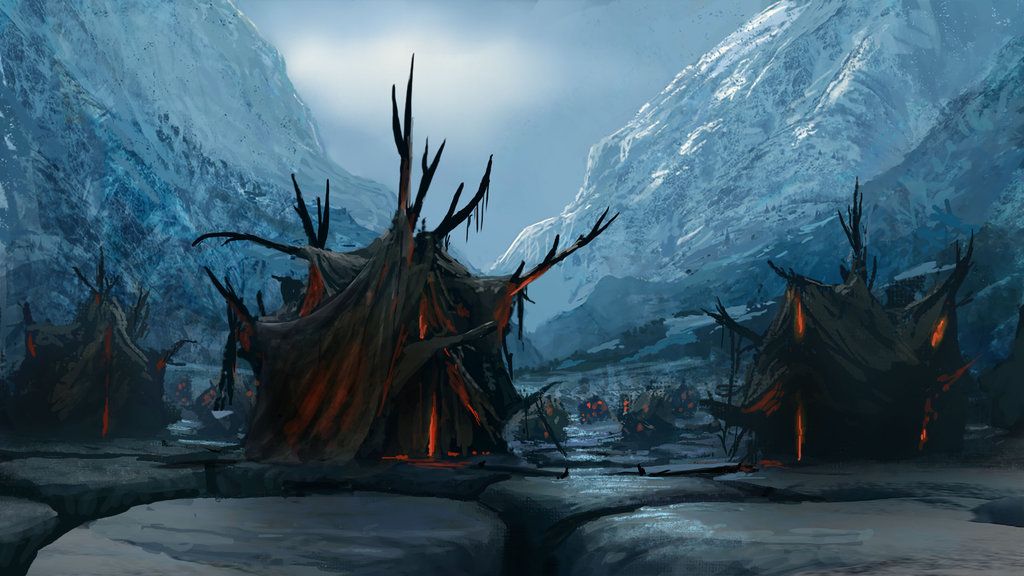
Their settlements typically consist of large tents framed with locally gathered tree branches and
covered with thick animal hides. When pitching a tent is not feasible, they construct snow
shelters—similar in style to an Eskimo igloo.
The tribe’s beliefs are rooted in shamanism and animism. Half-orcs believe that every living thing
possesses a soul capable of returning as a benevolent spirit. Consequently, meditation and communion
with spirits—ranging from higher entities akin to gods to the spirits of deceased ancestors—are
commonplace. Such prayers are intended to provide answers to the troubles plaguing the faithful and to
offer protection. Amulets provide additional safeguards against evil, disease, and other perils; they
are so ubiquitous that even the animals accompanying the tribe wear them. The amulets themselves are not
extraordinary objects; they are typically crafted from the bones, tusks, or fur of hunted game and
subsequently consecrated by a shaman during a special ritual. However, an amulet can also be fashioned
from a simple piece of wood—such as a fragment from the handle of a broken axe.
Given the tribe’s history—specifically their exile to a land of eternal winter as punishment for past
raids—they strive to avoid aggression, whether within the tribe (where the harsh weather conditions
already take a heavy toll) or directed at other races. Yet, from time to time, individuals are born who
are afflicted by a "curse." These individuals succumb to a murderous frenzy driven by pure aggression.
Because they typically lose consciousness during this trance—while their tattoos begin to glow
faintly—it is believed that malevolent forces are attempting to possess them in order to sow destruction
and slaughter others. To protect the rest of the clan, those afflicted by the curse must leave so as not
to pose a threat to others. While it is possible to return if the individual manages to break the curse,
no exile has ever actually made their way back to the clan. It is a rare occurrence—happening roughly
once every 90 years—but when such an individual does appear, there is no leniency.
Finally, regarding the shamans, it is worth mentioning their ability to discern the truth. In general,
shamans can always detect when someone is lying. Because a lie could jeopardize the clan's safety, tribe
members have been incapable of lying for centuries; the concept is entirely alien to them, and speaking
the truth is simply a given. Over time, this has evolved to the point where they are not even aware that
it is possible to speak of things that did not actually happen.
As for their appearance, such prolonged isolation has resulted in them differing slightly from the
typical half-orcs found elsewhere in the world. Their skin is quite dark, featuring a blend of brown,
gray, and deep blue hues. Additionally, their eyes appear somewhat flattened and have smaller pupils
than those of the average half-orc. Their tusks—a hallmark of orc-related races—have also undergone a
slight change; while still larger than a typical human's, life in a land of eternal winter has enabled
tribe members to close their mouths fully, keeping the tusks inside and thereby minimizing heat loss.
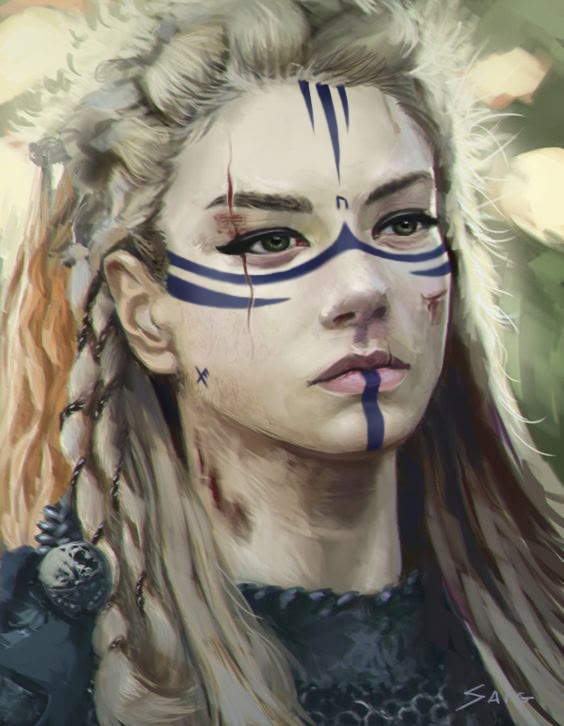
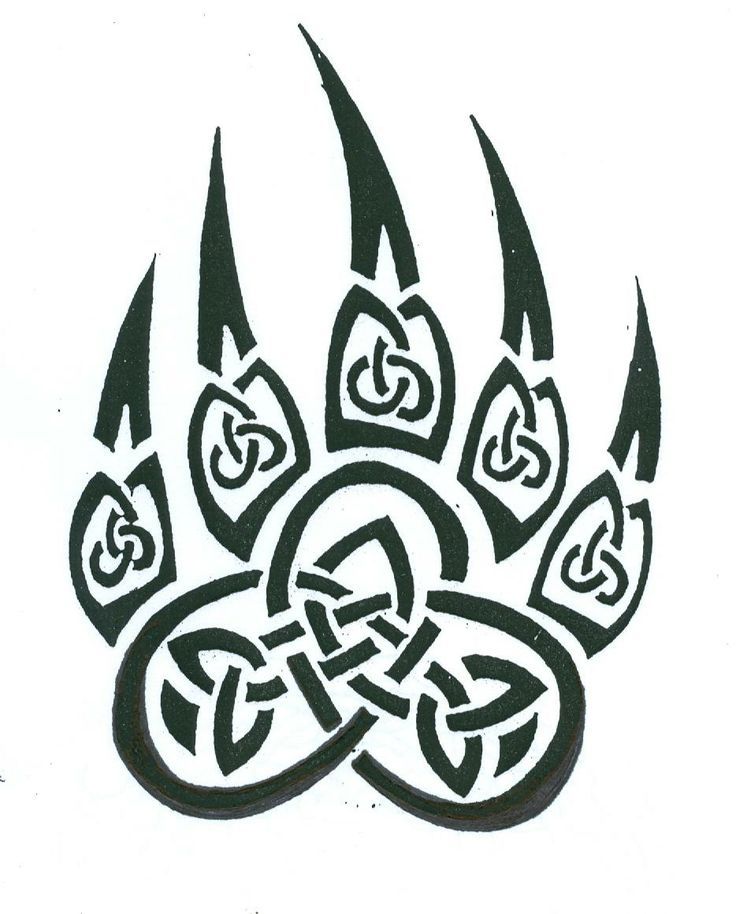
Most Innuqutakki cover their bodies with tattoos. These are typical tribal designs intended to secure
the favor of spirits and offer protection against evil. Due to the primitive techniques used for skin
marking, the patterns usually consist of simple lines—typical tribal motifs—executed in one or, at most,
two colors. Some individuals also bear tattoos of animals representing guardian spirits.
Concepts and thoughts in design process:
This character was created for the D&D 5th Edition tabletop role-playing game (TTRPG).
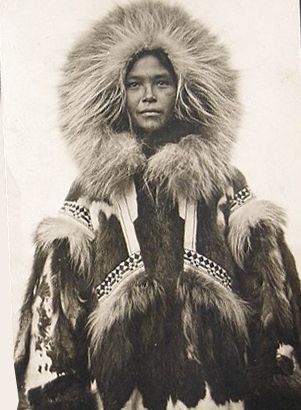
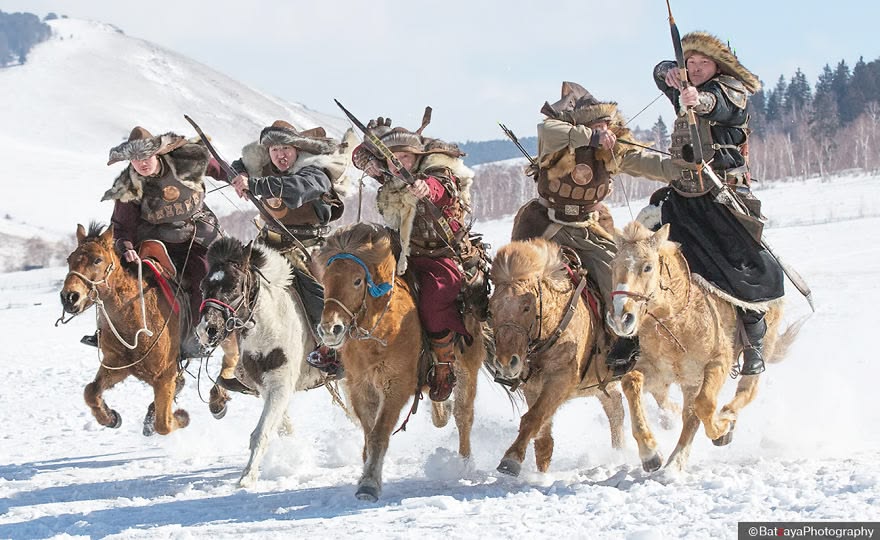
The primary idea was to create a barbarian belonging to a nomadic tribe. When developing the tribe's
concept, I drew inspiration from Inuit and Mongol cultures.
One of the biggest challenges was giving a unique flavor to the barbarian's core mechanic: the Rage. I
wanted to avoid the stereotypical approach where the player simply declares, "I go into a rage," every
single time. I decided to make this mechanic a pillar of the character's story and development, leaving
room for the DM to weave it into the narrative. To better reflect the vision of Rage as spiritual
entities taking control of the character, I imposed a limitation: it could not be triggered at will. The
decision to enter a rage rested with the DM; sometimes they would trigger it when deemed appropriate
given the in-game events, while at other times, they would make a secret die roll to determine if the
character actually entered the rage. Another idea linked to this mechanic involved the use of glowing
tattoos. I developed a pantheon of the tribe's most important spirits, assigning each a unique
backstory, attributes, and colors. Consequently, when the character entered a rage, the tattoos would
glow in specific colors, indicating which spirit was taking control. This served as a clue from the GM,
as each spirit approached problem-solving differently, hinting at the optimal course of action (for
instance: focusing entirely on the main adversary; using the frenzy as a tool to escape a battle against
overwhelming odds; concentrating on protecting allies; using the frenzy—and the resulting bonus to
Strength checks—to find a new path in a dead-end situation, etc.).
The aspect of having no concept of lying.
My previous character I was playing before Amagar, was Charisma/Deception/Persuasion- maxed type of
character —he could convince people the sun was cold, and they’d actually believe it. With Amagar, I
decided to go in the exact opposite direction. I justified this approach by citing the tribe’s harsh
living conditions, its small size, and the constant struggle for survival. In such circumstances, the
group’s fate hinges on everyone giving their all; there is no room for hidden agendas, shady schemes, or
evasiveness. While roleplaying such a character was quite a challenge, it also led to many interesting
or funny interactions. For instance, another player controlled a rather cynical character who frequently
resorted to lying just for fun and pranks. When they found an unusual-looking stone (without any magical
properties, just normal stone), they handed it to Amagar, claiming that meditating with the object daily
would teach him how to cast spells. Needless to say, what has become part of Amagar’s schedule during
long rests from then on.
Religion and beliefs.
The religious aspect was another element I wanted to incorporate into the character of Amagar. Aside
from his massive great-axe, his most important possessions were talismans, spirit figurines, and herbs.
His
belief that every living thing possesses a spiritual essence capable of returning in various forms
fostered a deep respect for the fallen. Consequently, Amagar carried a wood-carving kit for crafting
simple amulets. Whenever it was impossible to cremate an opponent's remains after a battle, he would
always try to place an amulet on the corpse to prevent the deceased from returning as an evil spirit.
His worldview and superstitions were also rooted in tribal legends. One tale concerning a powerful
guardian spirit recounts how Amagar's tribe battled a necromancer who summoned an army of skeletons
rising
from the earth. Consequently, a common belief holds that one should avoid staying underground, for the
longer a person remains there, the greater the risk of transforming into a skeleton.